
Casement and awning windows
Airtightness, kitchens over a sink, and windows you can't reach easily
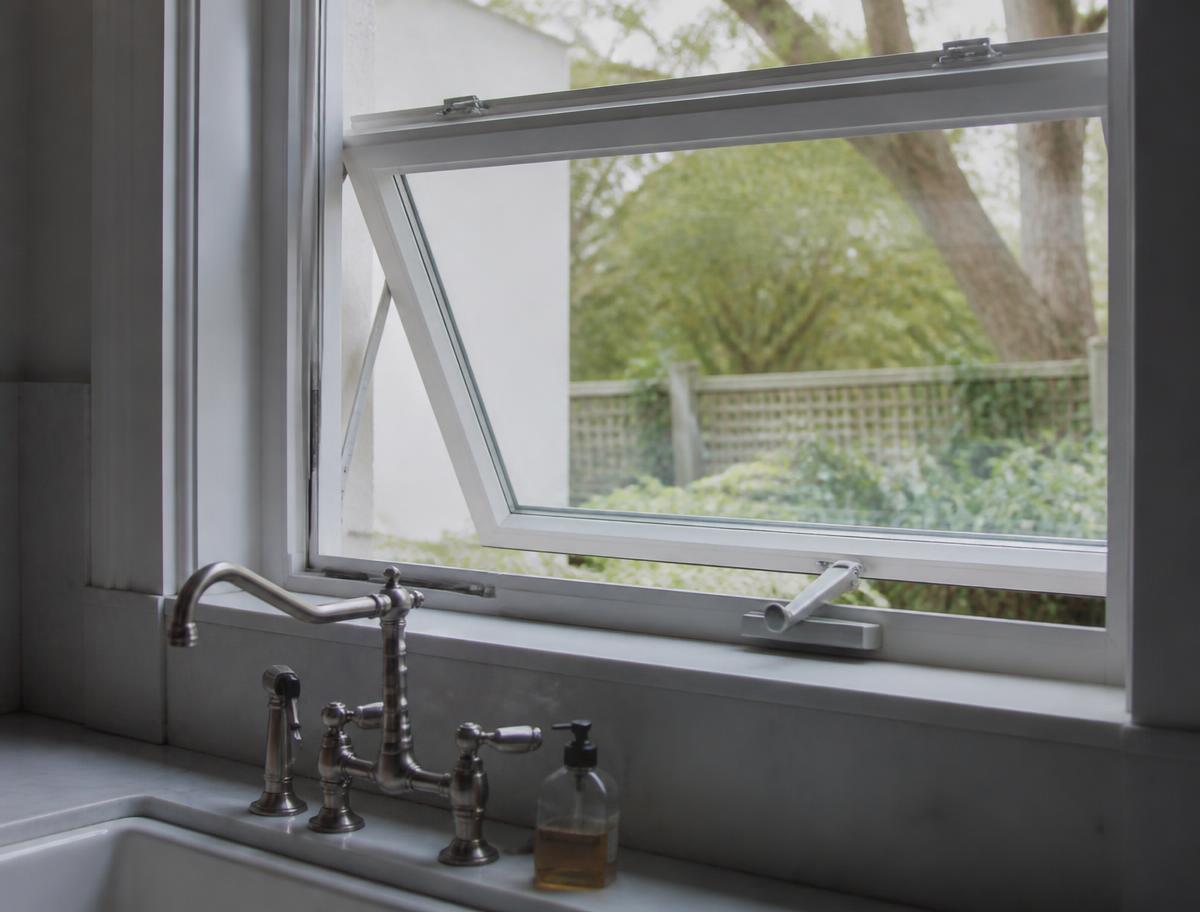
A casement does one thing no sliding window can: it pulls shut. Turn the crank and the whole sash is drawn against a continuous gasket by multi-point hardware, the way a refrigerator door seals. That single mechanical difference is why casement and awning windows consistently outperform hung and sliding units on air infiltration.
The awning is the same idea hinged at the top, which makes it the quiet hero of the kitchen: the crank is reachable across a counter, nothing swings into the room, and it can stay open in light rain because the sash is its own little roof.
How it works, and what that means day to day
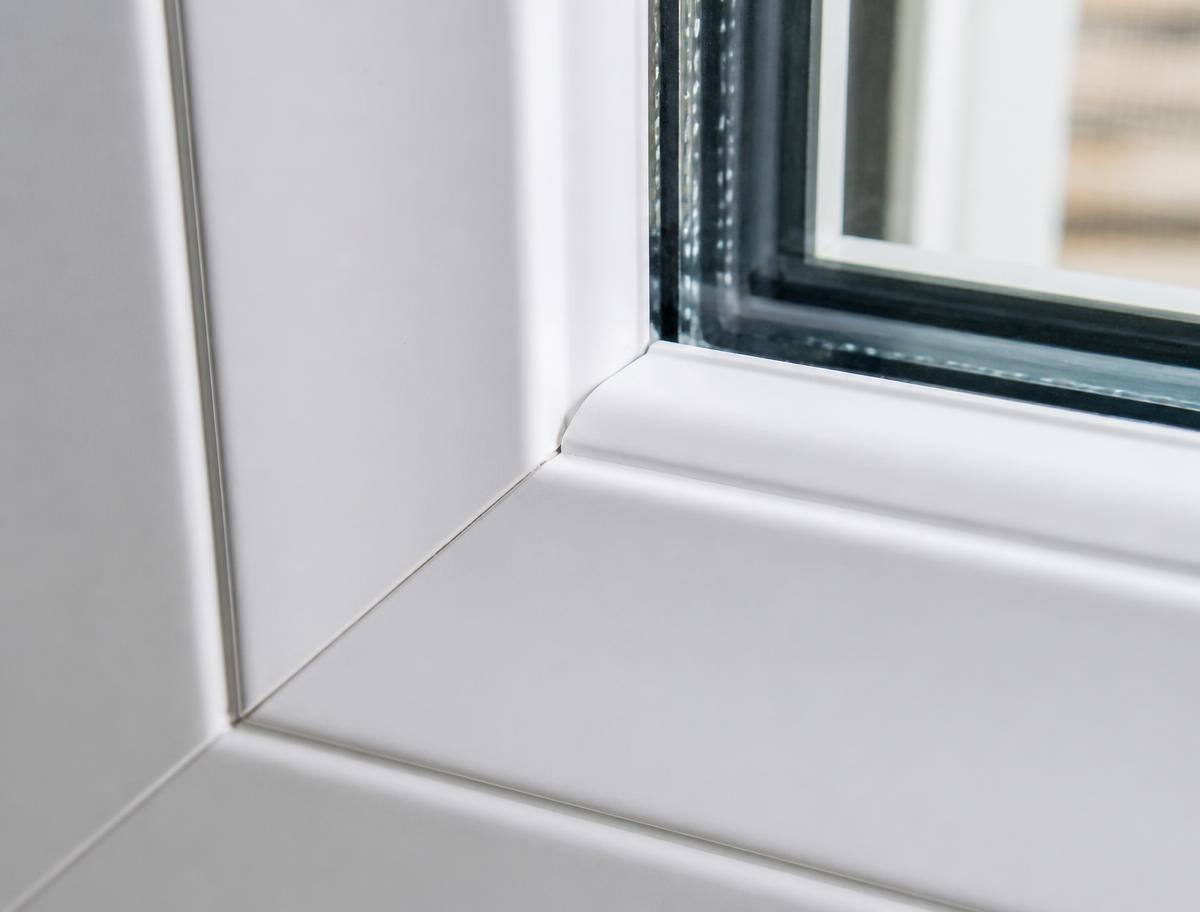
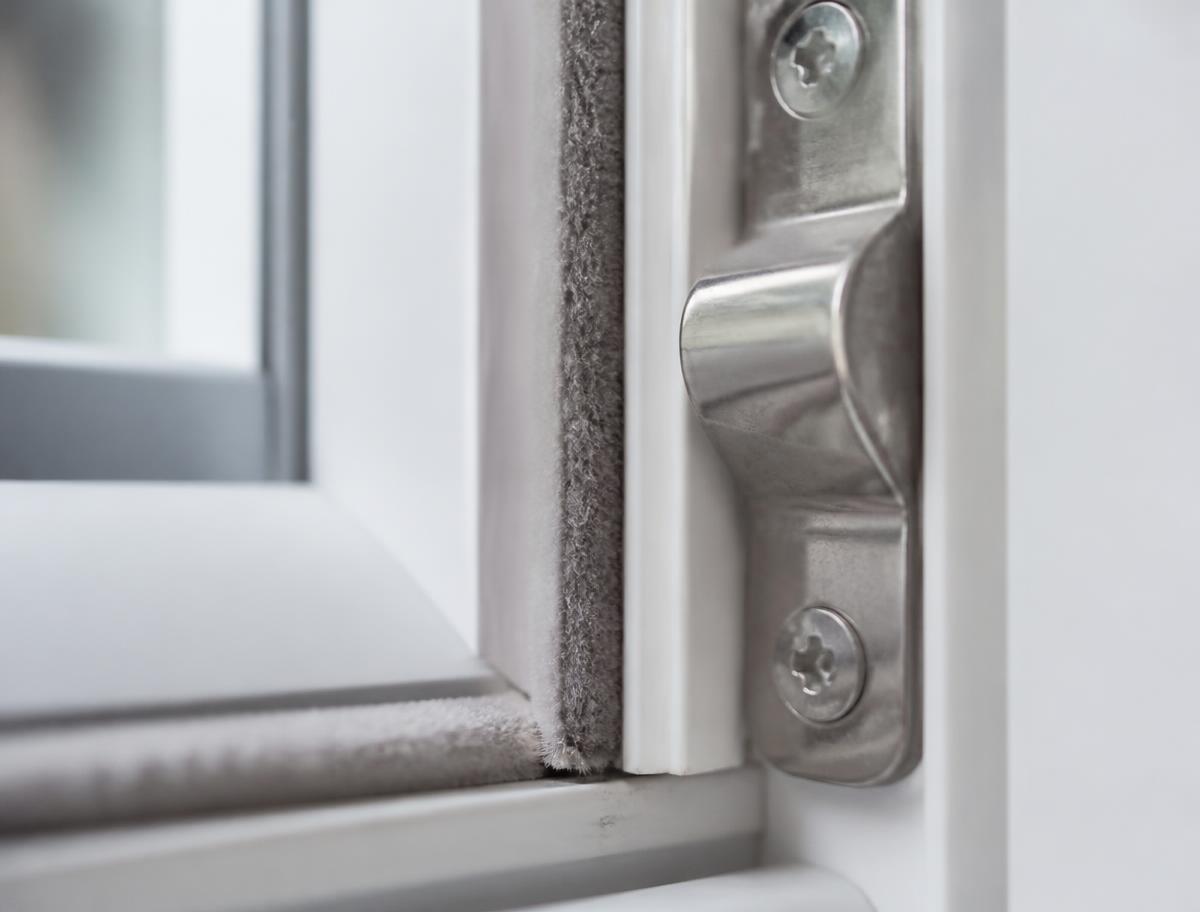
A geared operator swings the sash out and, more importantly, draws it back in tight. Locking points down the sash edge hold that compression. When the wind pushes on a closed casement, it pushes the sash harder into its seal rather than away from it.
Because the sash swings out, the exterior face of the glass ends up within arm's reach of someone standing inside — a real advantage in a house with no side yard.
What sets it apart from the other five
- The tightest seal of any operable window here, alongside tilt-and-turn.
- The whole opening opens, and an angled casement sash catches side breezes a slider or double-hung would miss.
- An awning ventilates during rain — no other type on this list does that reliably.
- It needs outside clearance to swing, which double-hung, sliding and picture windows do not.
- Screens sit on the inside, which changes how the window looks from within the room.
Where it fits best
- Kitchens — an awning over the sink, cranked from across the counter.
- Exposed elevations that take wind-driven rain, where the compression seal earns its keep.
- High or awkward openings: stairwells, above cabinets, bathrooms.
- Narrow side-yard gaps in detached and semi-attached houses, where cleaning from outside is impossible.
- Rooms where every square inch of ventilation matters.
Trade-offs to know before choosing
The sash needs somewhere to go. Over a walkway, a deck path or a tight lot line, an outward-swinging casement is a hazard rather than a feature. Hardware is more complex than a cam lock, so there is more to maintain. And while a well-sized casement can serve as a bedroom escape opening, an awning's limited hinge travel often cannot — that has to be checked against the measured clear opening, not the catalogue size.
Questions worth raising at the estimate
Every opening argues its own case. These are the details that decide whether a casement or awning is the right answer in your rooms rather than in general.
- Measured net clear opening if the room is a bedroom — the daylight opening, not the frame size.
- Exterior clearance: walkways, fire escapes, party walls, neighbouring buildings, air shafts.
- How you will clean the outside of the glass once it is installed.
- Whether an air conditioner, window guard or existing gate has to keep working.
- Glazing package for the exposure — sun, wind-driven rain, or street noise.
- For landmarked or historic-district properties, what the Landmarks Preservation Commission and DOB will accept before anything is ordered.
Tell us what you would like to change.
You do not need to know the product name or have every measurement ready. Start with the property, the windows, and the problem you want to solve.